Losing a university degree or college diploma can be a significant source of stress, especially when you are in the middle of a job application, a professional licensing process, or an immigration filing. Your diploma is more than just a piece of paper; it is the physical manifestation of years of hard work and dedication. When it goes missing, whether due to a move, a fire, or simple misplacement, the path to obtaining a replacement is rarely as simple as clicking a 'reorder' button. Most post-secondary institutions in Ontario require a formal legal document known as a Statutory Declaration before they will even consider issuing a duplicate certificate.
In the past, this meant taking time off work to find a local lawyer or visiting a municipal office in person. However, the legal landscape in Ontario has shifted. Today, you can use an online notary or commissioning service to complete this process from the comfort of your home. This guide will walk you through everything you need to know about commissioning a Statutory Declaration for a lost or damaged diploma online in Ontario.
What is a Statutory Declaration for a Lost Diploma?
A Statutory Declaration is a formal statement made by a person (the declarant) who conscientiously believes the statement to be true. It has the same legal weight as an affidavit or a statement made under oath in a court of law. When you lose your diploma, the university needs a legal assurance that the original is truly lost, destroyed, or stolen, and that you are not attempting to obtain multiple copies of the same credential for fraudulent purposes.
In the context of a lost diploma, the declaration typically includes your full name, your student identification number, the specific degree or diploma earned, the year of graduation, and a detailed explanation of what happened to the original document. By signing this document in front of a commissioner for taking affidavits, you are legally attesting to the truth of these facts.
Why Schools Require Online Commissioning for Replacements
Educational institutions take the integrity of their credentials very seriously. A diploma is a high-value document that can be misused if it falls into the wrong hands. By requiring you to commission a statutory declaration, the school ensures that there is a legal record of the loss. If it is later discovered that the declarant lied about the loss of the original, they could face serious legal consequences, including charges of perjury under the Criminal Code of Canada.
For residents of Ontario, the shift toward remote commissioning has made this requirement far less burdensome. Instead of searching for a "notary public online" and hoping for the best, you can use specialized Ontario services that understand the specific provincial regulations governing the Commissioners for taking Affidavits Act.
The Legality of Online Commissioning in Ontario
One of the most frequent questions we receive is: "Is online commissioning actually legal?" The answer is a definitive yes. In 2020, the Ontario government passed Bill 190, the COVID-19 Response and Reforms to Modernize Ontario Act, which included permanent changes to the Commissioners for taking Affidavits Act. These changes allow for the remote commissioning of documents, provided that the commissioner can see, hear, and communicate with the declarant in real-time through video conferencing technology.
This means that when you use an online notary service in Ontario to commission your diploma declaration, you are using a process that is fully recognized by Ontario law, universities, and government bodies. The process involves a digital signature and an electronic version of the commissioner's seal, which is just as valid as a physical stamp on paper.
How to Commission an Affidavit Online for Your Diploma
The process of using an online commissioning service is designed to be efficient and user-friendly. Here is a step-by-step breakdown of how it works at The Online Notary:
1. Prepare Your Document
Most universities provide a specific template for a "Statutory Declaration of Lost Diploma." If your school has a template, download it and fill in all the details, but do not sign it yet. If they do not provide a template, you can draft a simple statement including your student details and the circumstances of the loss. If you are unsure, our team can often provide guidance on the standard wording required by Ontario institutions like the University of Toronto, York University, or TMU.
2. Book Your Online Session
Choose a time that works for you. Unlike traditional offices, online commissioning services often offer flexible hours that accommodate busy professional schedules. You will receive a link to a secure video conferencing platform.
3. Identity Verification
Before the session begins, you will be required to verify your identity. This is a critical security step. You will typically need to upload a clear photo of a valid, government-issued photo ID (such as an Ontario Driver’s License or a Canadian Passport). The commissioner will verify this ID during the live video call to ensure the person signing the document is who they claim to be.
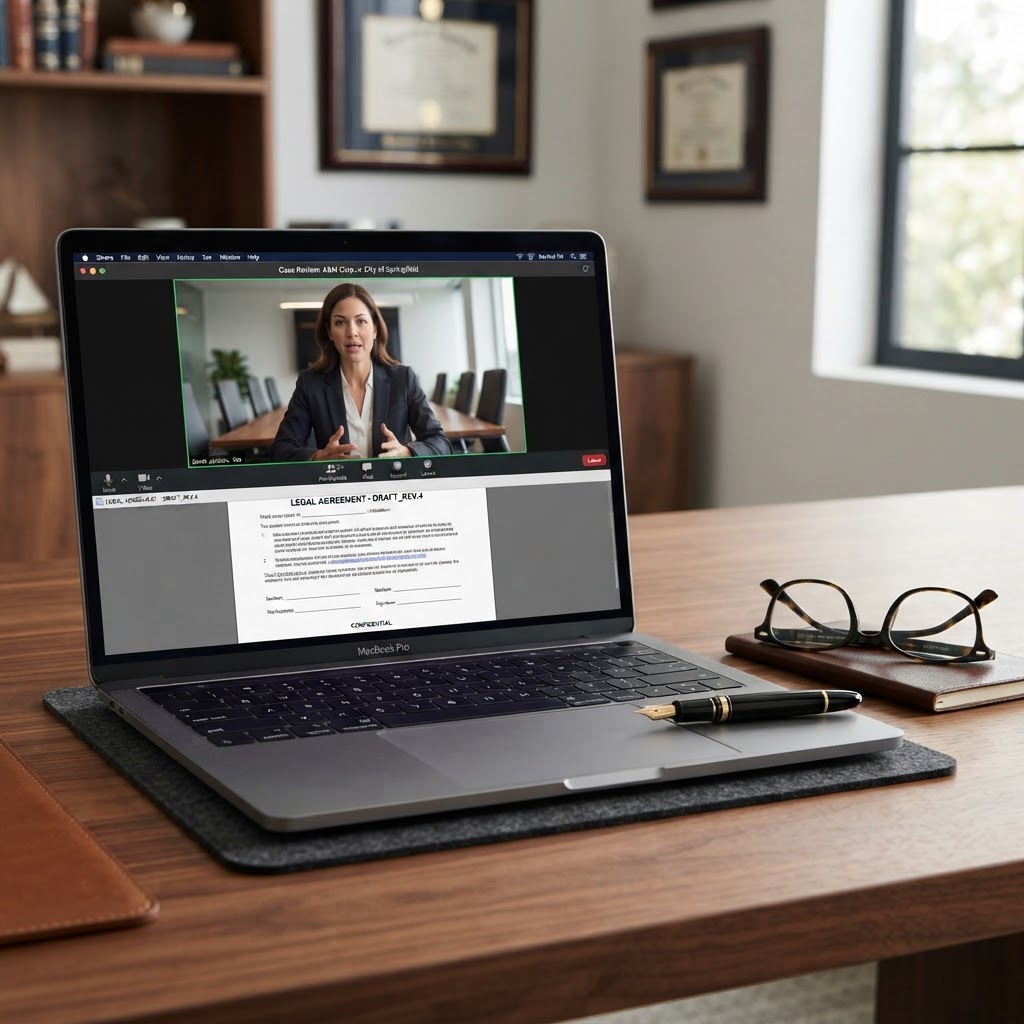
4. The Live Video Call
During the call, the commissioner will review the document with you. You will be asked to swear or solemnly declare that the contents of the document are true. This is the core of the commissioning act. You will then apply your electronic signature to the document while the commissioner watches via the video link.
5. Receiving Your Commissioned Document
Once the call is complete, the commissioner will apply their digital seal and signature. The completed, legally binding document is then sent to you via email as a PDF. You can then upload this PDF directly to your university’s replacement application portal or print it if a hard copy is required.
What to Include in Your Declaration
To ensure your university accepts your Statutory Declaration on the first try, make sure it contains the following information:
- Your Full Legal Name: This should match the name on your student records and the original diploma.
- Student Number: This helps the registrar's office quickly locate your file.
- Degree Details: Specify exactly what you earned (e.g., Bachelor of Arts in Honours Psychology).
- Date of Convocation: The month and year you graduated.
- Circumstances of Loss: Be specific. If it was lost during a move, state the date of the move and that a search was conducted. If it was stolen, include a police report number if applicable. If it was damaged, explain how (e.g., water damage from a basement flood).
- Promise to Return: Many universities require a clause stating that if you ever find the original diploma, you will return it to the university immediately.
The Benefits of Choosing an Online Notary Service
Choosing to commission an affidavit online offers several advantages over the traditional in-person method:
- Speed: You can often get your document commissioned within minutes of realizing you need it. No more waiting days for an appointment.
- Accessibility: Whether you are currently living in a remote part of Northern Ontario or you have moved overseas since graduating, you can access an Ontario commissioner as long as you have an internet connection.
- Cost-Effectiveness: Online services often have transparent, flat-fee pricing, saving you the travel costs and hourly rates associated with traditional law firms.
- Environmentally Friendly: Electronic commissioning reduces the need for paper, printing, and physical transportation.
Common Pitfalls to Avoid
While the process is straightforward, there are a few common mistakes that can delay your diploma replacement:
- Signing Too Early: The most common mistake is signing the document before the video call. The commissioner must witness the act of signing. If you sign it early, you will have to print a new copy and sign it again during the session.
- Expired ID: Ensure your photo identification is current. An expired passport or driver's license cannot be used for verification purposes.
- Poor Lighting/Audio: For a remote commissioning session to be legal, the commissioner must be able to clearly see and hear you. Make sure you are in a well-lit area with a stable internet connection.
- Incomplete Information: Double-check your student number and the exact wording of your degree. Universities are very precise; even a small typo can result in a rejected application.
FAQ: Commissioning a Lost Diploma Declaration Online
Q: Can I use an online notary if I no longer live in Ontario? A: Yes. As long as your document is intended for use in Ontario (e.g., for an Ontario university), an Ontario commissioner can commission the document for you regardless of where you are currently located in the world.
Q: How long does the online commissioning session take? A: Most sessions for a single statutory declaration take between 10 and 15 minutes, including the identity verification process.
Q: Will the university accept a digital seal? A: Yes. Under the Electronic Commerce Act of Ontario, electronic signatures and seals carry the same legal weight as physical ones. Most Ontario universities are now fully set up to accept digital PDF submissions for replacement documents.
Q: What if I lost multiple degrees from the same school? A: You can usually include multiple degrees on a single Statutory Declaration, provided they were all lost in the same incident. Check with your university's registrar office for their specific preference.
Conclusion
Dealing with the loss of a diploma is a hassle, but proving the loss to your university doesn't have to be. By choosing to commission your statutory declaration online, you are opting for a secure, legal, and incredibly convenient solution that fits into your modern lifestyle. Our experienced team at The Online Notary is here to help you navigate the process quickly so you can get your replacement credentials and move forward with your career goals.
Ready to get your document commissioned? Book your online appointment with The Online Notary today and have your Statutory Declaration ready in minutes.